< All Topics
Print

Myalanna

The goddess of Spring: Myalanna

Lady of the Blooming Path, Weaver of What-Must-Be

“Whatever comes was always on Myalanna’s road.” — Saying among her faithful

Myalanna is the New Goddess of destiny and quiet acceptance. Where Thoron’s path is struggle and challenge, Myalanna’s is the winding road that leads exactly where it was always meant to go. Her followers trust that every choice, failure, delay, and coincidence is already woven into her design. She is counted among the four Silent Gods who ended the Age of Darkness and founded the New Faiths.


Quick Facts

Type: God of the New Faiths (Silent God)
Aspect: Destiny, acceptance, inevitability
Domains: Fate, cycles, spring, renewal, quiet wisdom, consequences
Celestial Body: The green planet Myalanna, herald of spring in the sky
Season: Spring
Pronouns: She / her
Titles: Lady of the Blooming Path, She-Who-Already-Knew, The Gentle Thread
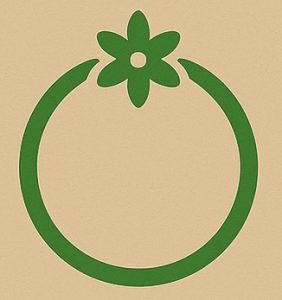
Symbols: Soft pink flower within a circle, unfurling spiral of petals, braided cords or wreaths
Colours: Spring green and soft pink; pale white or rose for accents
Gifts (as preached): Acceptance, insight, “right” timing, closure, unexpected blessings


Symbols and Appearance

Symbols

The most common emblem of Myalanna is:

  • A soft pink flower enclosed in a circle, usually on a spring-green field (the standard church banner).

  • Interlocking rings or braided cords, symbolising lives and choices woven together.

  • Bud-and-blossom motifs: one closed, one opening, one in full bloom, representing stages of a life already known to the goddess.

Shrines and chapels often display a simple carved circle or flower-wreath, sometimes painted green and pink if funds allow.

Appearance

Unlike the Old Gods, the Silent Gods have not walked openly on Eonil since the end of the Age of Darkness. Their churches insist that they speak only through visions and through the highest ranks of the clergy.

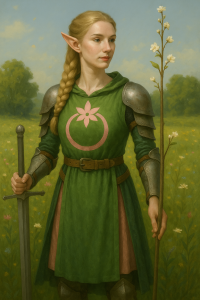
For this reason, most folk have no clear image of what Myalanna “truly” looks like. Where she is depicted at all, she is usually shown as:

  • A tall, feminine figure cloaked in layered robes, face half-veiled.

  • One hand scattering petals or tiny lights along a path, the other hand drawing a thread or ribbon from a spindle.

  • Sometimes her eyes are closed, as though listening to the future; sometimes they are painted in mismatched colours, hinting at seeing all possibilities at once.

These images are understood as symbolic rather than literal. The church itself often reminds worshippers that “it is not her face but her plan that matters.”


Myalanna in the Fifth Era

In the present day, Myalanna’s worship is firmly established across the Xaverion Islands and beyond. Her season marks the turning from harsh winter into hopeful spring: roads clear, trade resumes, and people look for signs that “Myalanna’s plan” is unfolding.

Her faithful are both respected and side-eyed. To some, Myalanna is a comforting goddess: she promises that pain and setback have meaning, that wrong turns will still lead where they must. To others, her followers seem dangerously passive—too quick to shrug and say, “It was meant to be,” when their choices wound others.

Still, her church remains powerful. Counselors, judges, and negotiators often invoke her name when speaking of long-term consequences or when urging people to accept outcomes they cannot change.


Worship and Temples

Temples

On the Landing of the Gods, Myalanna’s great temple rises in the east, facing the first light of spring dawn. It forms one quarter of the sacred ring of the New Faiths, opposite Thoron’s northern stronghold.

Across the islands:

  • Urban temples to Myalanna tend to be quieter than Thoron’s martial halls or Envylon’s proud sanctuaries. They favour walled gardens, cloisters, and small inner courtyards where supplicants can sit and reflect.

  • Rural shrines may be nothing more than a stone circle, a standing wreath, or a carved flower set where two paths meet. Travelers leave ribbons, dried flowers, or written promises weighted with stones.

Priesthood

Myalanna’s clergy are typically:

  • Mediators and listeners, trained more in counsel than in spectacle.

  • Called upon to witness vows, settlements, and farewells—anything where people must accept a turning point: marriages, divorces, inheritances, peace treaties, and last words.

They wear spring-green robes edged in pale pink, with a simple circle-and-flower sigil at the breast. In more formal vestments, they may add braided sashes to symbolise woven destinies.


The Nature of Her Faith

The heart of Myalanna’s doctrine can be summed up in one phrase:

“Everything is set and will play out the way it was meant to.”

Her followers believe:

  • The future is already determined by the gods’ design, though its reasons may remain hidden.

  • Every act—whether bold choice, fearful hesitation, or doing nothing at all—was always part of that design.

  • Even failure and suffering are threads needed for the larger pattern.

Outsiders accuse them of using fate as an excuse, refusing responsibility because “Myalanna wanted it so.” Yet the stricter priests argue the opposite: that owning one’s actions is itself a requirement of her plan. Dodging consequence, they say, only delays the lessons the goddess intends.

Socially, Myalanna is also known as:

  • A transgender goddess, spoken of as a woman who was not always seen as such.

  • Patron of the muscular feminine and of women who love women—those who feel out of step with what others expect but trust that “Myalanna made me as I am, for a reason.”


Myth & History

The Coming of the Silent Gods

During the late Age of Darkness, when Ghor’s corruption and the wars of mortals threatened to tear the world apart, four new deities appeared: Thoron, Myalanna, Envylon, and Ysandra. They united in a Pact of Unity, vowing to end the chaos and bring order back to Eonil.

Together they:

  • Gathered the First Ghor Hunters, mortals chosen from various races and callings.

  • Led the fight against corrupted beasts and the undead.

  • Declared the Old Gods—Quintra, Denday, and Ghor—“dead”, insisting that any lingering miracles were mere superstition or residue, not true divine favour.

From this struggle came the New Faiths, the Landing of the Gods, and the calendar still used today, in which Myalanna’s planet marks the second season of the year: spring.


Festivals in the Season of Myalanna

The second season of the year is Myalanna’s season, when snowmelt swells the rivers and the first bright flowers break through the old frost. Several beloved celebrations take place during this time.

Myalanna’s Festival of Blossoms

As winter’s grip loosens, daisies, snowbells and early wildflowers blanket fields and roadsides. Across the Xaverion Islands, people mark Myalanna’s Festival of Blossoms—a week of dances, garlands, and promises.

Common elements:

  • Promise dances, where partners trade ribbons or flower-bracelets symbolising new bonds, business ventures, or budding romance.

  • Decorating homes and village squares with fresh greenery and floral arches to invite favourable outcomes in the year ahead.

  • Public declarations like “Whatever comes, we will face it together,” spoken in Myalanna’s name.

Some scholars quietly point out that the festival is older than the New Faiths and originally marked the simple turning of the seasons; only later were Myalanna’s colours and symbols woven into it.

The Legend of the White Hare

Between the Ghor cycles of Garandar and Qastaii, many communities celebrate the Legend of the White Hare. Children and adults alike search meadows and gardens for hidden, brightly painted eggs said to be gifts of a magical white hare with fur patterned like swirling stars.

A common rhyme recited before the egg-hunt begins:

“Bright hare, bold and fleet,
With fur of stars and nimble feet—
Grant me luck, grant me cheer,
A swirled egg found will bless my year!”

Those who find a “swirled egg” are said to receive a year of good fortune or a nudge further along the path Myalanna always intended for them.

Starfall Masquerade

Later in the season, on Bohrday in the cycle of Noent, the city of Xaveri hosts the infamous Starfall Masquerade at the House of the Eternal Dawn.

Though dedicated more to daring glamour than quiet piety, the festival is still counted among Myalanna’s great celebrations because:

  • It marks turning points in many lives: fortunes made or lost, alliances forged, truths confessed under mask and moonlight.

  • Regular guests joke that “Myalanna decides who you really meet at Starfall.”

In the official calendar, the Masquerade is recorded simply as another seasonal ball. In tavern tales, however, people whisper that more than one life-path has changed there in a single night, as if the goddess had taken the opportunity to nudge her threads into a new pattern.

Tags:
Table of Contents