< All Topics
Print

Thoron

God of Struggle and Winter

“Power unchallenged rots. Stand, fight, prove.” — saying among Thoron’s faithful

Thoron is one of the four gods of the New Faiths and patron of struggle, earned strength and survival. His followers say that power must be fought for, never merely inherited, and that those who endure hardship have the right to claim what they win.

The season of winter is counted as Thoron’s season. When his wandering star first rises, the year begins. In Church teaching and common talk, Thoron is spoken of as a man who claimed his own form and destiny; many transgender men, men who love men, and those who have had to fight for their place in the world look to him as their patron.


Quick Facts

  • Type: God of the New Faiths

  • Domains: Struggle, trial, earned power, survival, winter

  • Celestial body: Thoron’s wandering star, herald of the new year

  • Pronouns: He / him

  • Titles: God of Struggle and Winter; the Winter Lord (in some regions)

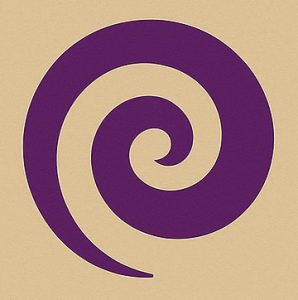
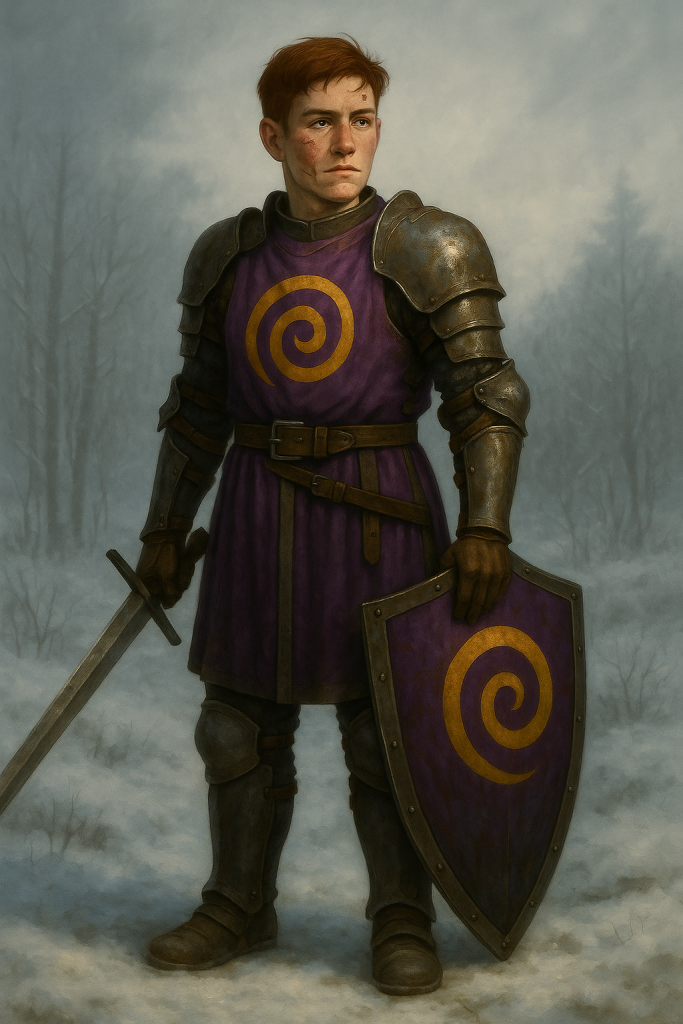
  • Symbols: Gold spiral on a royal purple field; Thoron’s star at the turning of the year

  • Colours: Royal purple and gold

  • Gifts (as his followers claim): Resolve, resilience, courage to fight on, strength to hold what is yours


Symbols and Appearance

Symbols

The most common sign of Thoron is a golden spiral on a royal purple banner. This emblem hangs over temple doors, is stitched onto paladin tabards and priestly stoles, and marks documents sworn in his name.

Other signs associated with him include:

  • The first rising of Thoron’s star that marks the new year.

  • The cold clarity of the winter season, when weakness and pretence are thought to be stripped away.

Appearance

The gods of the New Faiths are silent gods. They do not walk openly among mortals, and the Church keeps no single, agreed likeness of Thoron.

Most worshippers would recognise his banner long before they could describe his face. In some regions he is painted as a stern warrior, in others as a cloaked traveller or a simple, broad-shouldered man standing against the wind—but such images are understood to be symbols, not true portraits.

What is certain in all tellings is that Thoron is spoken of as a man who chose and proved himself, rather than simply accepting what he was given.


Thoron in the Fifth Era

In the Fifth Era, Thoron is one of the four openly worshipped gods of the New Faiths, alongside Myalanna, Envylon and Ysandra. Together, these gods are recognised by law and custom across the Xaverion Islands.

The Church teaches that:

  • The Old Gods Quintra, Denday and Ghor are dead.

  • Their worship is heresy, a dangerous remnant of an age of darkness and corruption.

  • True strength lies in following the New Faiths and proving oneself under their gaze.

For ordinary folk, Thoron’s name is heard most often:

  • In winter prayers and New Year rites.

  • On the lips of soldiers, hunters and those who expect hard work ahead.

  • In stories of people who survived what should have killed them and “stood up again under Thoron’s eye”.


Worship and Temples

Temples

Thoron is worshipped through the Church of the New Faiths, which serves all four gods.

  • Every settlement keeps at least one temple to the New Faiths.

    • In small villages, all four gods share one building.

    • In larger towns and cities, each god often has a separate hall or chapel, including a house for Thoron.

  • On the Landing of the Gods island, where the four first appeared, Thoron’s great temple rises in the north, facing the temples of the others across a central meeting ground.

Purple-and-gold banners line the walls of his halls, the spiral catching torchlight like a tightening storm.

Priesthood and Paladins

The ranks of Thoron’s clergy follow the shared pattern of the New Faiths:

  • Acolyte – newly sworn to the god, learning scripture, law and ritual.

  • Priest – serves at the temple or travels with Church business once approved by a high priest.

  • High Priest – leads a temple. In smaller temples a single high priest speaks for all four gods; in larger complexes Thoron may have one of his own.

  • Grand Priest of Thoron – one of four Grand Priests, each representing a New Faith god at the highest councils.

Paladins of the New Faiths also swear oaths in Thoron’s name:

  • Paladins in training follow a mentor and are tested at the proving grounds on the Landing of the Gods.

  • Full paladins ride out to fight undead, monsters and heresy, and to enforce Church law where civil rule falters.

Orders that draw heavily on Thoron’s teaching tend to prize endurance, discipline and a readiness to do hard, ugly work “so others may live in peace”—though history shows how easily such zeal can turn cruel.


The Nature of His Faith

Thoron’s teachings can be summed up in three words: struggle, proof, survival.

His priests preach that:

  • Power that is never challenged rots.

  • Position and title mean nothing if you cannot hold them.

  • Those who stand again and again after every fall are those whom Thoron favours.

Among his followers it is commonly said that:

  • Power is never truly inherited. One may inherit opportunity, but not worth.

  • The weak must either grow stronger, find those willing to protect them, or be swept aside.

  • Challenging those above you is not sin—failing to deserve your place is.

This harsh view makes Thoron both admired and feared. To some he is the god who got them through hunger and cold; to others, he is the god whose name is used to justify leaving the fallen behind.


Myth & History

The Landing of the Gods

Late in the Age of Darkness, when undead, plagues and wars ravaged the world, four new gods are said to have appeared upon a small island now called the Landing of the Gods. Thoron was among them.

The stories agree on a few points:

  • The island shook with their arrival.

  • Strange lights circled above it for three nights.

  • On the fourth dawn, there stood four new temples where once there had been none.

From this island the gods sent out their first messengers, calling mortals to abandon the Old Gods and join a new, united faith to cleanse the world.

The First Ghor Hunters

In the earliest days of the New Faiths, twelve champions answered the call to fight Ghor’s lingering horrors. They are remembered as the First Ghor Hunters:

  • Thyr, Luna, Bohr, Amber – the first priests.

  • Twill, Gondo, Vic, Esmay – the first paladins.

  • Lohn and Mavee – ranger and knight.

  • Aktor and Li – wielders of great magic.

Their names became the days of the week, and later heroes who fell battling powerful servants of Ghor lent their names to the Ghor Cycles that divide the year. All of this is tied to Thoron’s season and star, weaving his story into the very way people count time.

Heresy and Cleansing

Under the banner of the four gods, the Church declared that the Old Gods were dead, their blessings nothing but the last echo of a poisoned age. Temples of Quintra and Denday were torn down or turned to new uses; any open worship of Ghor was hunted without mercy.

Those who refused to abandon the Old Faiths were marked as heretics. Thoron’s harsh creed—“only the strong endure; only the proven deserve power”—gave ready words to those who oversaw the purges and trials.

The Crimson Order

During the undead crisis on Naquart, a militant brotherhood known as the Crimson Order rose under Thoron’s colours.

  • At first, they were welcomed as protectors, riding to the defence of villages attacked by undead.

  • Their victories brought them followers, wealth and influence.

  • Over time, their doctrine hardened. Enemies multiplied; suspicion grew.

In the end, the Crimson Order became a grim warning written in blood: that devotion to struggle and cleansing, taken too far, can devour the very people it claims to protect.


Festivals in the Season of Thoron

The season of Thoron begins when his star first rises and winter settles in. Several important celebrations fall within this time.

Thyr Garandar Thoron – New Year’s Feast

On the last night of the old year:

  • People write down one regret and one wish, then burn the papers in the new year’s fire, believing the flames carry away the weight of the past and warm the hope of the coming year.

  • Music and dancing fill the night.

  • The morning after is slow and gentle, with a shared new year’s breakfast and talk of beginnings.

Gondo Brea Thoron – Legend of the Lumin Doves

This day honours the tale of Isla and Miren, and the enchanted doves that carried their unspoken feelings.

  • Lanterns and white banners are hung in town squares.

  • People watch the sky for Lumin Doves, real or imagined.

  • Many choose this day to confess love or speak long-hidden truths, trusting Thoron to favour courage of the heart as well as courage of the sword.

Luna Noent Thoron – The Ball of the Hunter and the Fox

First held by Lord Galahan to celebrate his wedding and the new calendar, this masked ball has grown into a winter tradition.

  • Guests attend masked as hunters, foxes and other roles of pursuit and escape.

  • Dances and games echo the chase between hunter and fox, lover and beloved, past and future.

  • After Lady Galahan’s death, the ball continued as a blend of remembrance and hope: proof that joy can be fought for even after grief.

Li Noent Thoron – Tikkit the Trickster

The last notable day of Thoron’s season is given to Tikkit, a mischievous sprite.

  • Small, clever pranks are played on friends and family.

  • Tricks must be harmless and witty; cruelty is frowned upon and said to anger both Tikkit and Thoron.

  • Laughter is seen as a victory over the long dark of winter.


In all of these, Thoron’s presence is felt less as a distant face and more as a pattern: the push to face hard truths, to speak or act even when it is difficult, and to keep standing when the year—and life—have been at their coldest.

Table of Contents